‎‎‎‎‎ㅤ
Home Catalogue Pressure control Ball Valves Full bore two pieces ball valve ICP 415 IIT

Specifications

  • Ball port & Design

    Split body, Full bore, ISO 5211, ATEX, Fire Safe, Fugitive Emission

  • Industry

    Chemical industries,
    Petrochemical industries,
    Hydraulic installation,
    Heating, water distribution,
    Compressed air

  • Materials

    body & full bore ball stainless steel ASTM A351 CF8M

  • Max. allowable pressure

    20 bar (Body design Class 150),
    Compressed air (ambient temperature) : 20 bar max. ,
    Steam : 12 bar maximum

  • Max. allowable temperature

    -50°C to + 230°C

  • Seat material

    PTFE seats

  • Flow rate

    Max.: Kv 4200 m³/h,
    Min.: Kv 20 m³/h

  • Operation

    Lever handle

  • Connections

    Flanged ASME B16.5 Class 150

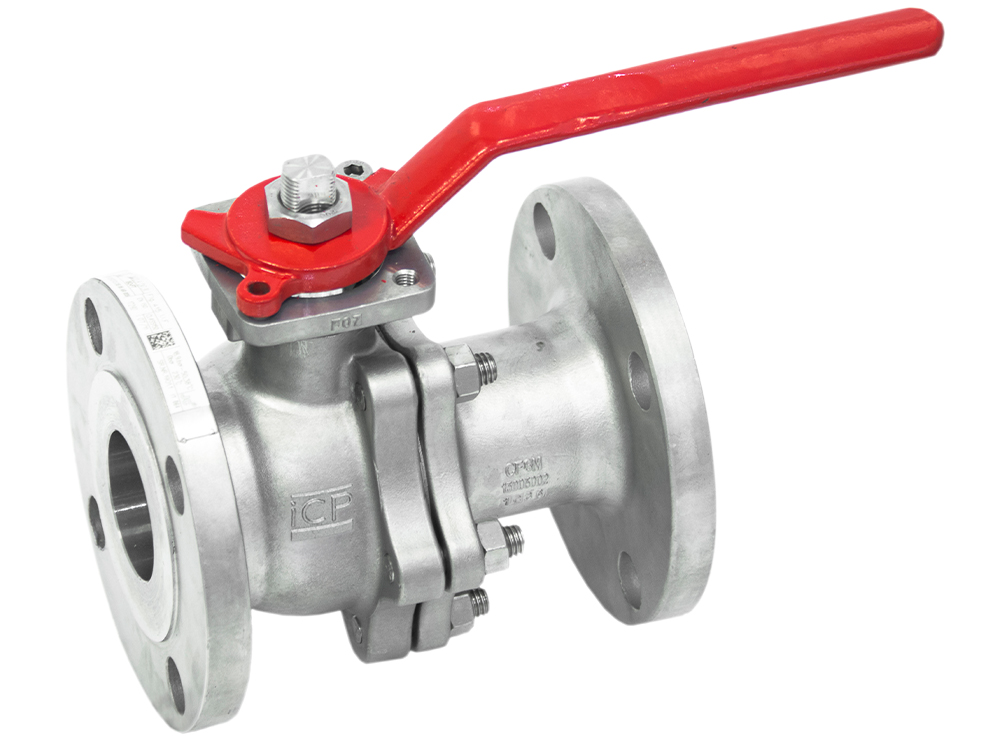
Full bore two pieces ball valve ICP 415 IIT

Product code: 415IIT000

Available on request

Price according to configuration

Choose your configuration
See all configuration
Ref.#.
ex. VAT
(INDICATIVE PRICE)

Quantity

-
+

No ready-made solution

Full bore two pieces ball valve ICP 415 IIT

2 pieces stainless steel split body ball valve ICP with full bore for Chemical industries, petrochemical industries, hydraulic installation, heating, water distribution, compressed air. Ball valve with firesafe certificate ISO 10497 to reduce risks in case of fire. Fugitive emission according to EN 15848-1 :2006 for an excellent tightness on the stem and to prevent external leakage. PTFE seat for a temperature up to +230°C. Compatible with explosive atmosphere, ATEX Zone 1&21 and Zone 2&22 thanks to the antistatic device. Handling possible with gearbox or stainless steel handle. Thanks to the ISO 5211 plate, an actuator can be installed on the valve.

MAIN FEATURES

Full bore

Anti blow-out stem

PTFE seat

Locking device

ISO 5211 mounting pad

2 pieces type ( Split body )

Class 150 PN20 RF flanges

Antistatic device

Fire safe ISO 10497 : 2004

Fugitive emissions EN 15848-1 : 2006

Graphite packing + FKM O ring on stem

With exhaust hole in the ball ( located in the top of the ball to avoid overpressure in it )

← Back to list